

Learn about Samsung TVs commonly available in Kenya, including Crystal UHD, QLED, Neo QLED, OLED, and Lifestyle models. Written by an expert Samsung TV repair center in Nairobi CBD offering professional diagnostics and maintenance.
If you own a Samsung TV in Kenya, you’re not alone. Samsung has become one of the most common TV brands in Kenyan homes, offices, lounges, sports bars, and hospitality spaces—mainly because the product range is wide, spare parts are relatively trackable, and the Smart TV experience is familiar.
But here’s the part most people only learn after a problem happens:
“Samsung TV” is not one product. It’s a whole ecosystem of different display technologies, board designs, power architectures, firmware families, and panel types.
And those differences matter—especially when you’re diagnosing faults and deciding what a repair should look like.
This article does two things at once:
- It helps you understand the Samsung TV models/series commonly available in Kenya, in a way that matches what you actually see in shops and homes here.
- It shows you how a serious repair center thinks—so you can recognize professional diagnosis, avoid guesswork repairs, and protect your money.
When you understand what you own, you make better decisions: what to buy, how to use it, and how to repair it properly when it fails.
Our Samsung TV Repair Center in Nairobi CBD
When your Samsung TV develops a problem—no display, black screen, power issues, flickering, boot loops, sound with no picture, lines on screen, or random restarts—you don’t need gambling. You need diagnosis.
TV Repair Nairobi (Samsung TV Repair Services – Nairobi CBD)
Location: St. Ellis House, City Hall Way, opposite High Court Parking, Nairobi CBD
Phone: 0739 748 941
Email: tvrepairskenya@gmail.com
We offer expert Samsung TV repair and maintenance with a focus on correctness, transparency, and repeatable results.
👉 Read Also: Samsung TV Repair Prices in Nairobi (2026 Guide)
Why “Commonly Available in Kenya” Is a Useful Category
Kenya’s market is a mix of:
- official channel stock,
- parallel imports,
- older models still circulating as “new”,
- used units,
- hotel/commercial installations,
- and different region codes.
So “commonly available” doesn’t just mean “latest global release.” It means:
- models you’ll repeatedly encounter in Kenyan homes,
- series that retailers and resellers keep rotating,
- families that share the same typical faults and parts patterns.
That’s the list we’ll build below—category by category, with practical notes for buyers and owners, plus repair insights that help you trust your diagnosis.
Part 2: Samsung TVs Commonly Available in Kenya (By Category)
1) Samsung HD & Full HD Smart TVs (Budget + Secondary TVs)
Samsung HD and Full HD Smart TVs are the most basic and affordable TVs in the Samsung lineup. They are widely used across Kenya due to their lower purchase cost and compact sizes. These TVs are often chosen as secondary sets rather than primary living-room televisions. Despite being entry-level, they still carry Samsung’s Smart TV platform and core reliability standards. They are common in environments where budget and size matter more than cutting-edge picture quality.
These are common in:
- bedrooms,
- small apartments,
- rentals,
- hostels,
- offices,
- kids’ rooms.
Typical sizes in Kenya
- 32″ HD
- 40″ / 43″ Full HD (less common than 4K now, but still present)
What to expect
- They’re often chosen for price and size, not peak picture quality.
- Many are Smart TVs, but their app performance depends heavily on the processor generation and available storage.
Common experiences Kenyan owners report
- Slow app loading over time
- Wi-Fi dropping intermittently
- Stuck on logo
- Remote pairing issues
- Sound but no picture (especially after power events)
Repair insight: why these TVs fail
These sets commonly face:
- power supply stress (Kenya’s power fluctuations are a real factor)
- backlight failures (dim, dark patches, or black screen with sound)
- mainboard instability (boot loop, freezing, HDMI issues)
A good repair center does not “swap boards blindly.”
We confirm whether the fault is power, backlight, mainboard, panel-side, or firmware.
2) Samsung Crystal UHD (4K) TVs — The Most Common in Kenya
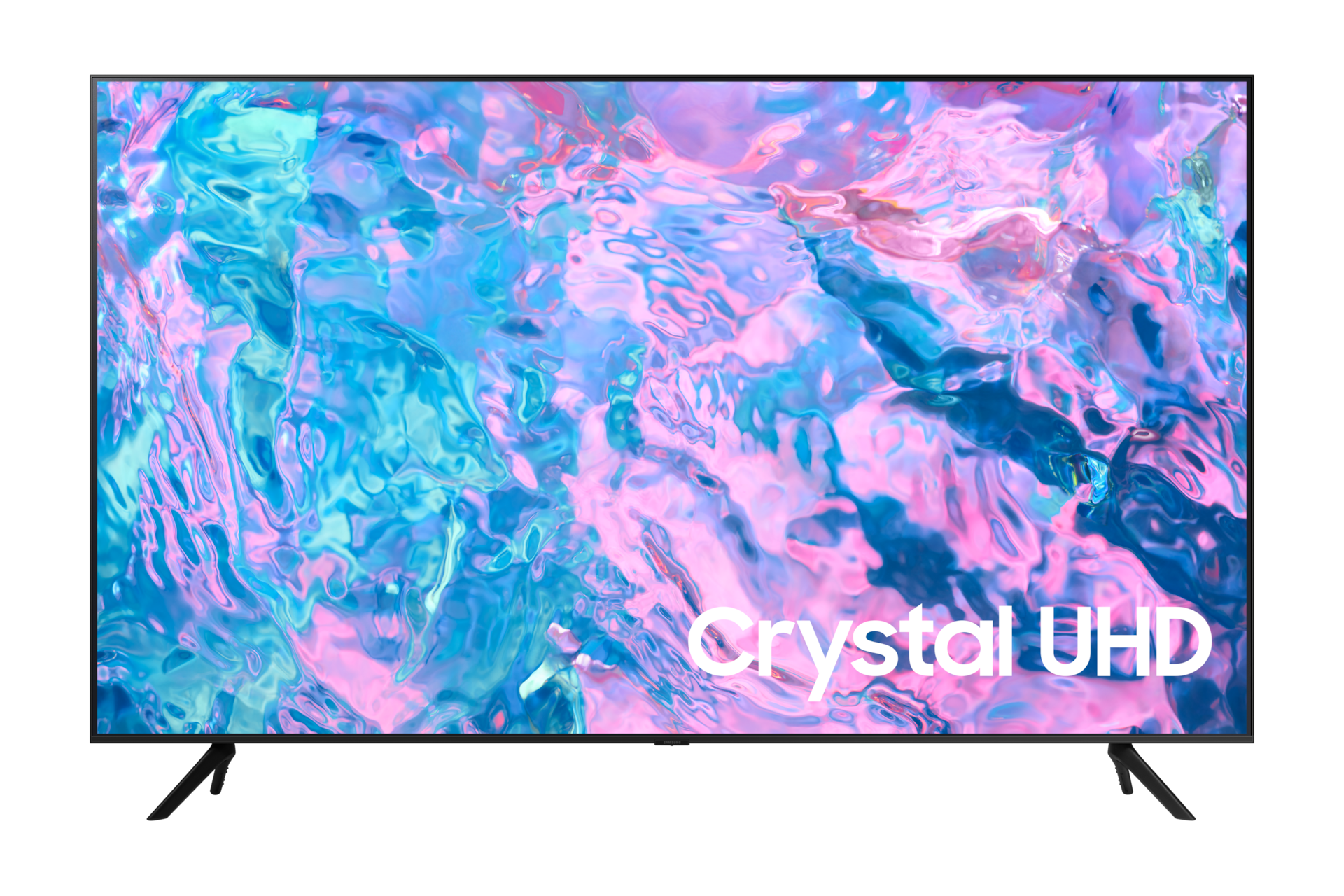
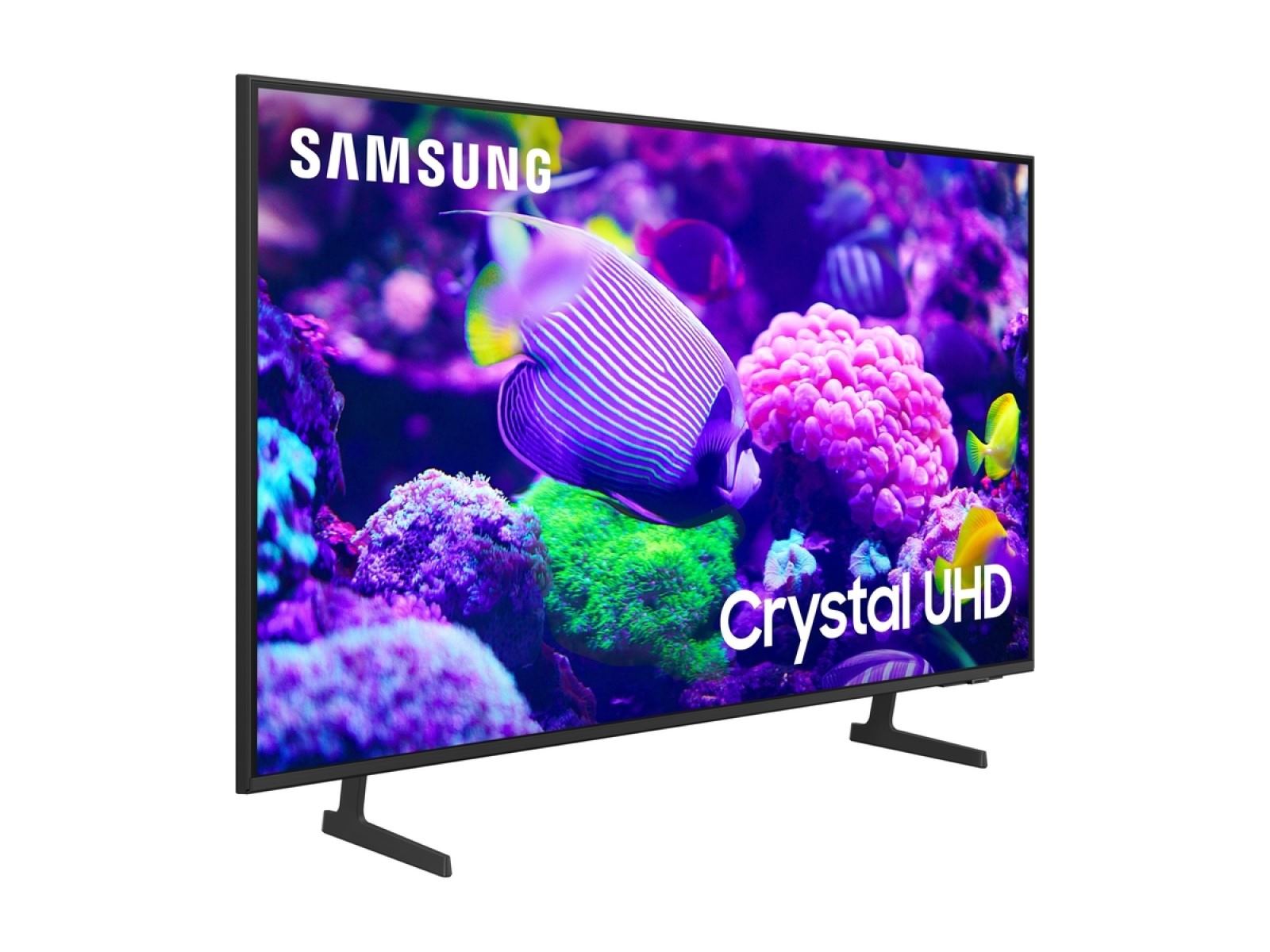
Samsung Crystal UHD TVs are the most common Samsung TVs found in Kenyan households. They represent Samsung’s entry-to-mid-range 4K category and are often the default recommendation in retail stores. These TVs strike a balance between affordability, modern features, and acceptable picture quality for everyday use. Crystal UHD models dominate the Kenyan market because they meet most users’ needs without moving into premium pricing. As a result, they are also the most frequently repaired Samsung TVs in Kenya.
Crystal UHD has become the “default” Samsung category because it hits the sweet spot:
- 4K resolution,
- smart features,
- good picture for normal viewing,
- and a price level many families can justify.
Crystal UHD series commonly seen in Kenya
- AU7000 series
- AU8000 series
- CU7000 series
- CU8000 series
Typical sizes commonly sold
- 43″
- 50″
- 55″
- 65″
- 75″ (growing in popularity)
What these TVs do well
- Good 4K clarity for normal viewing distance
- Solid streaming experience on Tizen
- Clean design, lightweight installation
- Works well for everyday TV: news, sports, YouTube, Netflix
Where Crystal UHD owners in Kenya get disappointed
This is where trust-building matters: we don’t oversell.
Crystal UHD is not designed to perform like QLED/OLED. In bright rooms, you may notice:
- less punchy highlights,
- less deep blacks compared to premium tech,
- limited peak HDR impact.
That’s not “a fault.” That’s just product segmentation.
Common Crystal UHD faults (very relevant to repairs)
- Black screen, sound present (often backlight failure or power/backlight driver issue)
- Flickering brightness (backlight aging, power regulation, LED strip imbalance)
- Half screen dark (backlight zones/strips failing)
- No power / dead TV (power board failure, surge damage)
- Boot loop / stuck on logo (mainboard firmware corruption, storage failure, power instability)
- Lines on screen (panel/T-Con/panel bond issues; diagnosis is critical)
Professional repair = identify the layer of failure.
Not every “black screen” is a panel. Not every “no power” is a power board. That’s why serious diagnosis is everything.
3) Samsung QLED (4K) TVs — Premium Color and Brightness
Samsung QLED TVs sit above Crystal UHD in Samsung’s product hierarchy. They are designed for users who want brighter images, stronger colors, and better performance in well-lit rooms. In Kenya, QLED TVs are common in premium homes, sports bars, and business environments where lighting cannot be controlled easily. While they are more expensive than Crystal UHD models, many buyers choose QLED for its visual punch and durability. From a repair perspective, QLED TVs introduce more complex backlighting and power systems.
QLED is a major step up in perceived quality—especially in bright Kenyan living rooms with sunlight.
Common QLED series seen in Kenya
- Q60B / Q60C
- Q70B / Q70C
- Q80B / Q80C
You’ll see these in:
- premium homes,
- sports bars,
- corporate boardrooms,
- higher-end apartments,
- showrooms.
Typical sizes
- 50″ / 55″
- 65″
- 75″
- 85″ (premium installations)
What makes QLED different
- Quantum Dot layer improves color volume and brightness
- Better perceived HDR than entry-level models
- Often better motion processing and upscaling
QLED realities (the honest version)
QLED is excellent for bright rooms. But it is not OLED.
If a buyer expects OLED-level blacks and perfect shadow depth, they might be disappointed.
Repair insights for QLED
Many QLED faults still map to the same core systems:
- power supply,
- backlight circuits (even though the image tech is “QLED,” the backlight still matters),
- mainboard,
- panel electronics.
Common QLED repair symptoms in Kenya:
- intermittent restarts (power regulation / mainboard)
- HDMI detection problems (mainboard)
- “white screen” or washed image (T-Con/panel side issues)
- flickering or pulsing brightness (backlight driver instability)
4) Samsung Neo QLED (Mini-LED) — High-End Contrast + Brightness
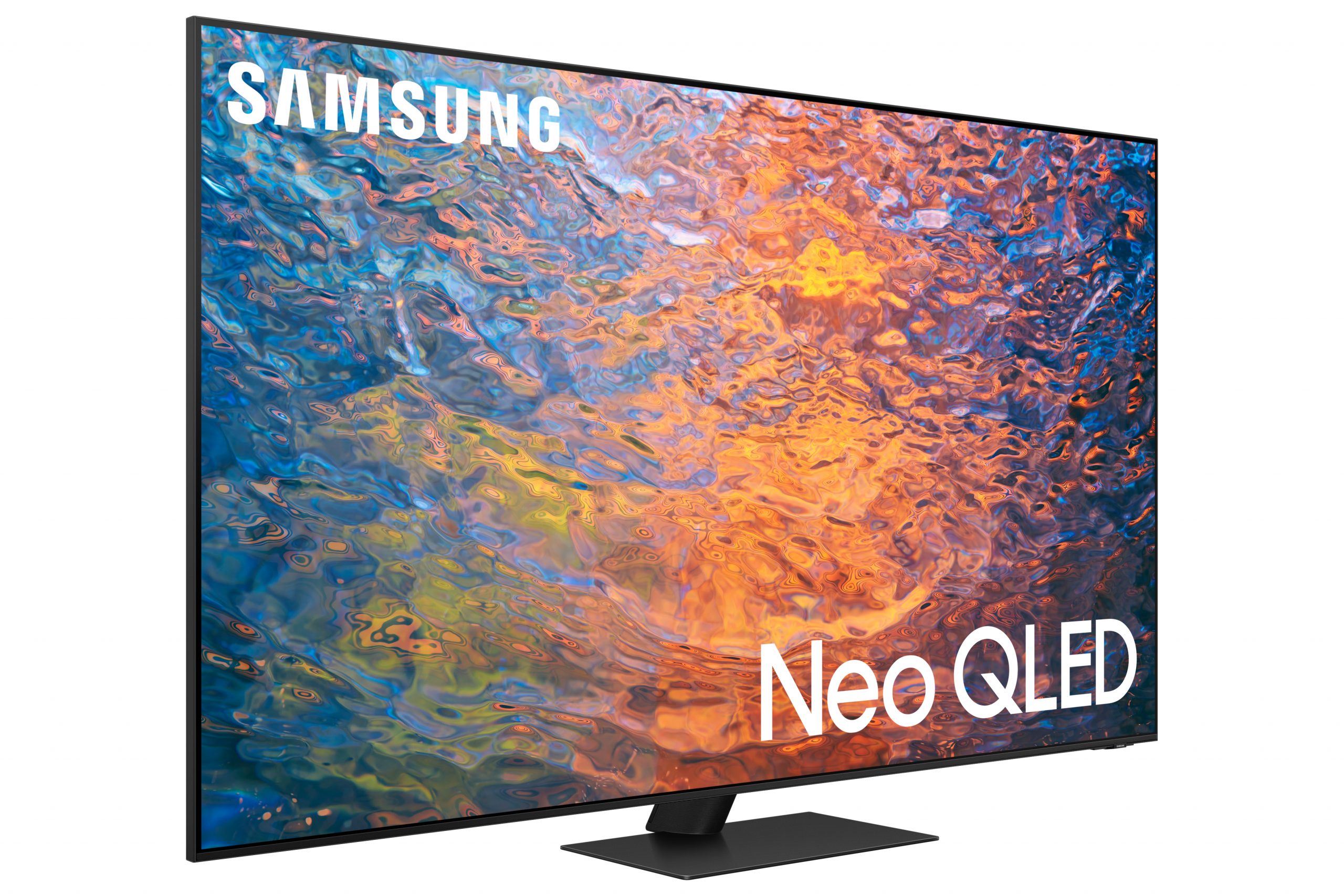
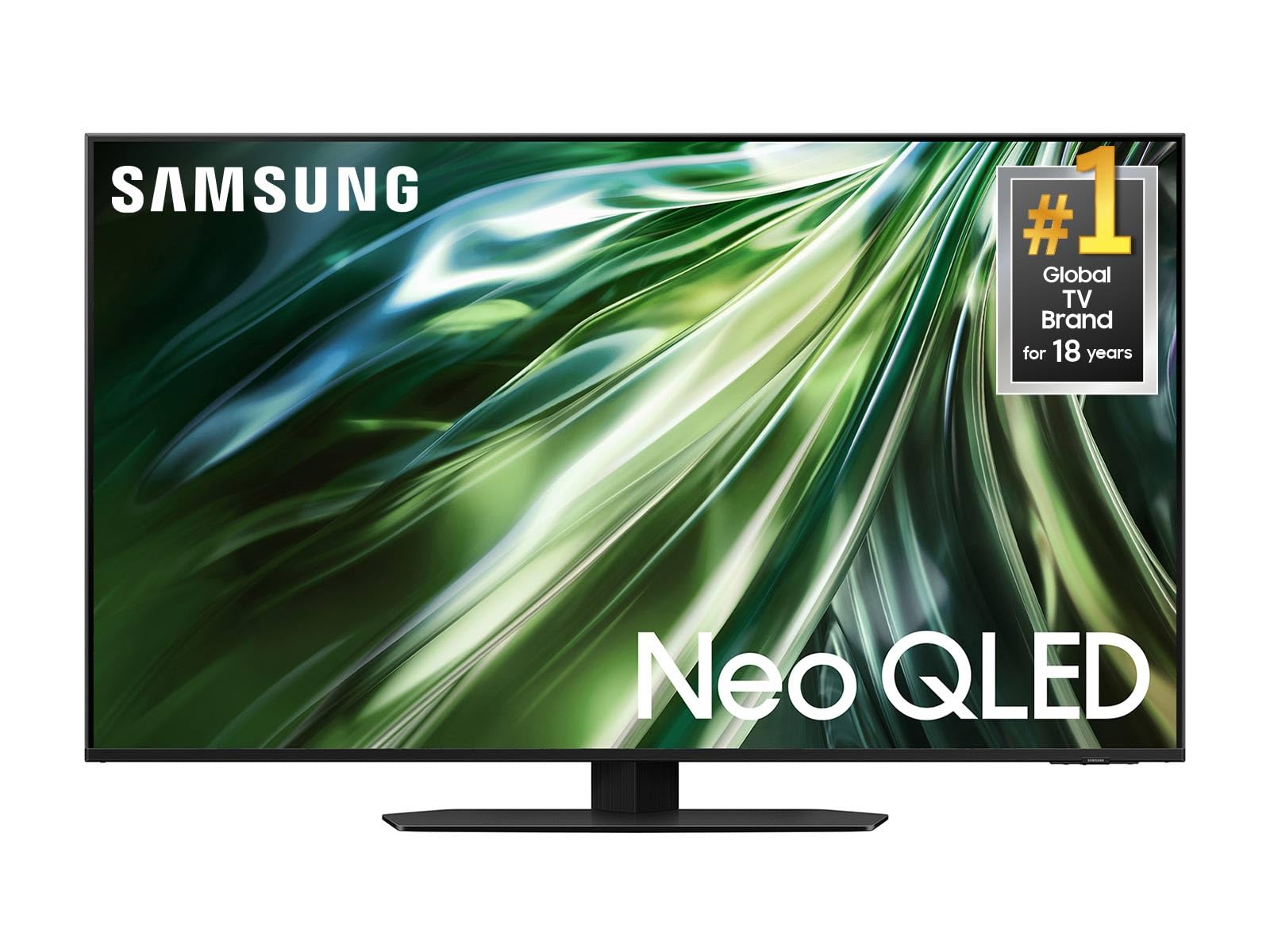
Samsung Neo QLED TVs represent a more advanced tier of QLED technology. They use Mini-LED backlighting, allowing for finer control of brightness and contrast across the screen. In Kenya, Neo QLED TVs are less common than standard QLED but are increasingly found in high-end homes and luxury installations. These TVs deliver impressive brightness and contrast without moving to OLED technology. Their internal complexity makes accurate diagnosis especially important during repairs.
Neo QLED uses Mini-LED backlighting, which usually means:
- better control of brightness across the screen,
- better contrast than standard QLED,
- and generally a premium experience.
Common Neo QLED series encountered
- Samsung QN85B / QN85C
- Samsung QN90B / QN90C
Typical sizes
- 55″ / 65″
- 75″
- 85″
Why Neo QLED matters for repairs
Neo QLED tends to involve:
- more complex backlighting control,
- more sophisticated power and processing paths,
- and sometimes more subtle fault patterns.
This is where “trial-and-error repair” becomes expensive.
Common Neo QLED issues we see in real life contexts:
- startup problems that look like power, but originate in mainboard regulation
- brightness anomalies that require careful backlight driver testing
- thermal issues in poorly ventilated wall installs (common in modern interiors)
A serious center checks ventilation, mounting style, and power environment, not just the board.
5) Samsung OLED – Premium Cinema Experience (Growing in Kenya)
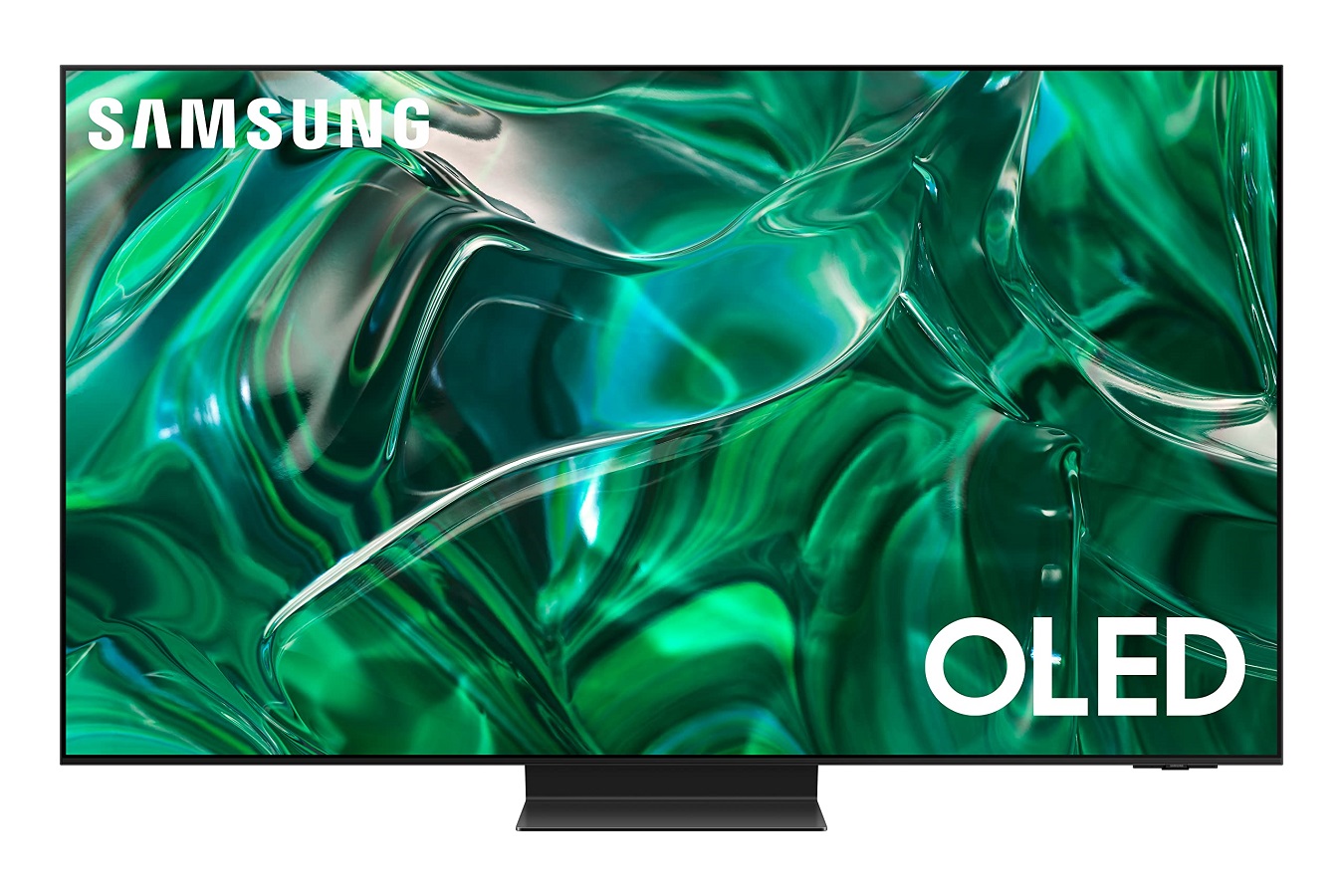
Samsung OLED TVs are part of the brand’s premium television offerings and are steadily gaining presence in Kenya. These TVs are chosen by users who prioritize picture quality above all else. OLED technology allows each pixel to light itself, producing perfect blacks and exceptional contrast. Because of their price, OLED TVs are typically found in high-end homes rather than mass-market settings. From a repair standpoint, OLED TVs require careful handling and precise diagnosis.
OLED adoption in Kenya has been increasing among:
- premium buyers,
- home cinema enthusiasts,
- high-end apartments.
Common Samsung OLED series you’ll see
- S90C
- S95C
Typical sizes
- 55″
- 65″
- 77″
Advantages of OLED (why people love it)
- Perfect blacks
- Incredible contrast
- Cinematic image quality
OLED care (what matters in Kenya)
OLED panels are premium and can be sensitive to:
- improper power handling,
- poor ventilation,
- high heat environments,
- and sometimes user habits like leaving static elements for very long periods (depends on usage patterns).
Repair insight:
With OLED, correct diagnosis is even more important because:
- panel-related repairs can be high cost,
- symptoms can mislead (e.g., a “no display” could be power or mainboard, not automatically panel).
We handle OLED cases with a “protect the panel first” mindset.
6) Samsung Lifestyle TVs — The Frame, The Serif, The Terrace
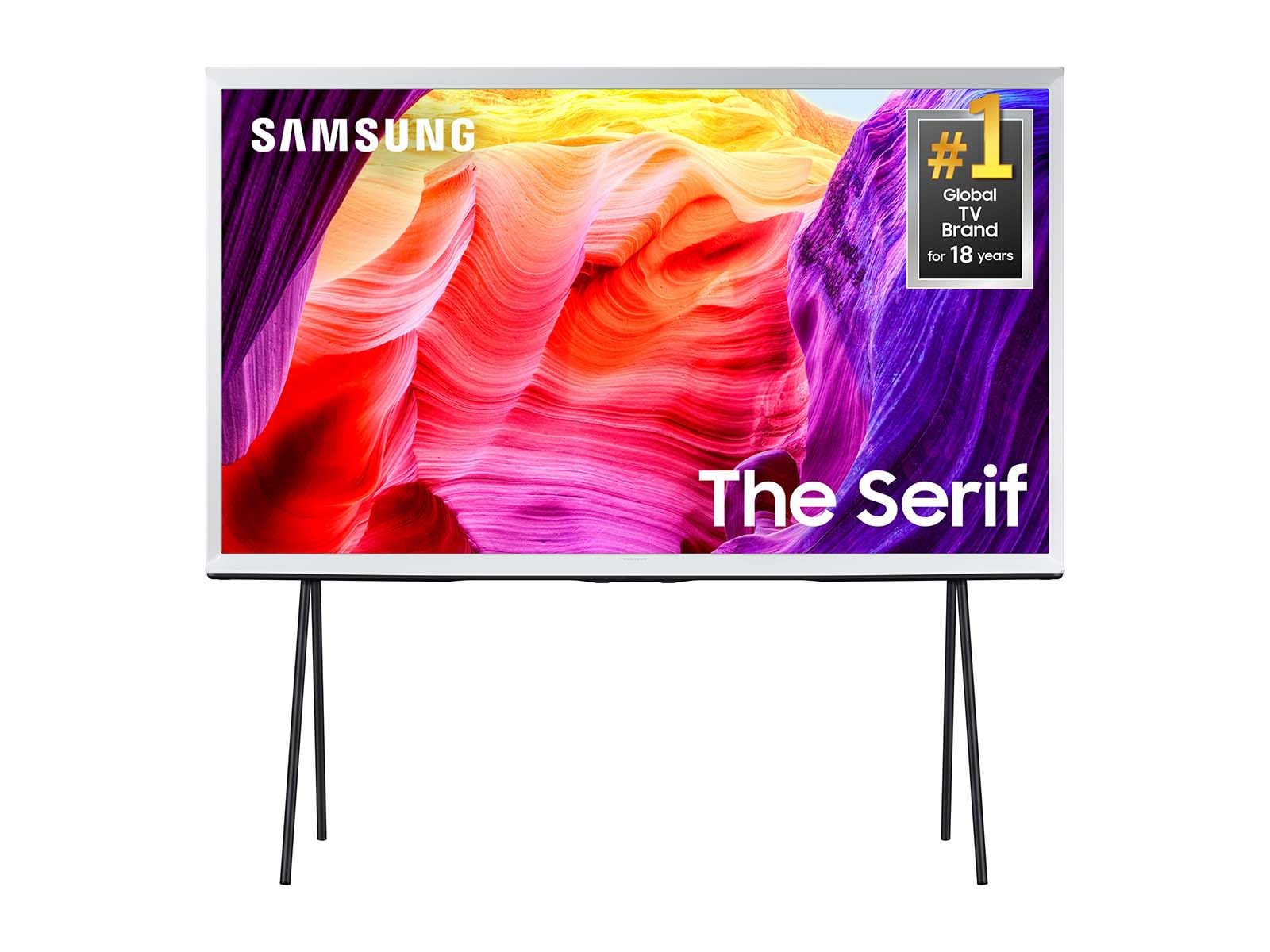
Samsung Lifestyle TVs are designed to blend technology with interior design. These TVs focus as much on aesthetics as on performance. In Kenya, they are less common than standard TVs but are increasingly popular in modern homes, offices, and hospitality spaces. Lifestyle TVs require thoughtful installation because design choices often affect ventilation and cable routing. Repair and maintenance must account for both electronics and installation context.
Lifestyle TVs are less common than Crystal UHD but increasingly visible in:
- stylish homes,
- offices,
- studios,
- hotels,
- galleries.
Models you may find in Kenya
- Frame (most common lifestyle model)
- Serif
- Terrace (rare, limited availability)
What makes them different
- Design-first approach
- Installation style matters (flush mounts, hidden cable management, décor integration)
Repair and maintenance realities
Lifestyle TVs are often installed in ways that can stress cables and ports:
- tight cable bends,
- hidden power routing,
- limited ventilation space behind the panel.
A quality repair center checks the installation context because:
- “random restarts” are simply overheating,
- “no signal” is cable strain damage,
- “intermittent power” is a stressed connector.
Why Understanding TV Categories Matters for Repairs
Each Samsung TV category uses different internal components, power designs, and display systems. A fault that is common in a Crystal UHD TV may present differently in a QLED or OLED model. Treating all Samsung TVs the same often leads to misdiagnosis and repeat failures.
A professional repair approach:
- identifies the TV category and series first,
- isolates the fault to power, backlight, mainboard, panel, or software,
- and only then recommends repair or replacement.
Part 3: The Kenyan Reality – Why Samsung TVs Commonly Fail Here
Trust is built by saying the quiet part out loud:
Many TV issues in Kenya are not “bad luck.” They are predictable outcomes of environment and usage.
1) Power quality and surges
Even in Nairobi, power events happen:
- spikes,
- brownouts,
- sudden outages,
- generator changeovers in buildings.
These events stress:
- power boards,
- backlight drivers,
- mainboards.
What we recommend (and why):
- Use a quality surge protector.
- If possible, use voltage regulation for sensitive setups.
- Avoid repeated hard power cycling.
2) Ventilation and wall-mounting habits
Modern interiors often mount TVs flush and tight to walls.
Heat builds up behind the unit, affecting:
- LED backlight longevity,
- power board stability,
- mainboard performance.
3) Dust and humidity patterns
Dust buildup reduces cooling efficiency and can cause:
- overheating,
- corrosion at connectors over time,
- fanless thermal stress.
4) Heavy daily usage in commercial spaces
Bars, salons, hotels run TVs for many hours daily.
Backlights wear out faster under heavy usage.
A proper repair is not just “fix and return.” It includes preventative advice based on how you use the TV.
Part 4: What Professional Samsung TV Diagnosis Looks Like
People often ask: “How do I know a repair was done properly?”
Here is the philosophy we use:
1) Symptom ≠ cause
A black screen might be:
- backlight failure,
- power rail collapse,
- mainboard crash,
- panel-side short,
- firmware corruption.
We don’t guess.
2) We isolate the system layer
We determine whether the failure is in:
- Power supply system
- Backlight system
- Mainboard / processing system
- T-Con / display control
- Panel-side electronics
- Software/firmware
3) We test before replacement
A repair center that replaces parts without confirming signals and rails is gambling with your money.
4) We confirm stability
A TV can “turn on” today and fail again tomorrow if the underlying issue is unresolved—like unstable voltage rails or thermal stress.
We verify stability and advise on prevention.
Part 5: Buying Guide – Choosing the Right Samsung TV in Kenya Without Regret
This section helps buyers make intelligent choices, not emotional purchases.
Step 1: Choose category based on room and usage
- Bedroom / small room: HD or smaller 4K Crystal UHD
- General living room: Crystal UHD or QLED
- Bright living room with sunlight: QLED or Neo QLED
- Cinema-focused dark room: OLED
- Design-focused space: The Frame
Step 2: Choose size based on distance
Kenyan homes vary: apartments, bungalows, bedsitters. Don’t oversize blindly.
A common practical pattern:
- 43″: small living room/bedroom
- 50″–55″: standard living rooms
- 65″: bigger lounges
- 75″–85″: large spaces or commercial
Step 3: Protect your investment from day one
- stable power handling,
- proper ventilation,
- correct wall-mount spacing,
- careful cable routing.
A TV isn’t “installed” if it’s mounted. It’s installed when it can run safely for years.
Part 6: Common Samsung TV’s Problems in Kenya
This is where you’ll recognize real-life symptoms.
1) “The TV has sound but no picture”
Usually points to:
- backlight failure,
- backlight driver issue,
- power rail issue feeding backlight system.
2) “Black screen, no sound, standby light present”
Could be:
- mainboard failure,
- power supply issue,
- software crash.
3) “Flickering screen / brightness pulsing”
Often:
- backlight strip imbalance,
- power regulation instability,
- driver circuit stress.
4) “Lines on the screen”
Could be:
- T-Con issues,
- panel-side electronics,
- panel bond faults.
Important truth:
Some line issues are repairable; some are panel-level. Diagnosis determines the honest answer.
5) “TV keeps restarting”
Common causes:
- unstable power rails,
- mainboard thermal issues,
- firmware corruption,
- internal short triggering protection.
6) “No power / completely dead”
Could be:
- blown power board,
- surge damage,
- internal short causing shutdown.
Part 7: Maintenance That Actually Helps
A lot of “TV maintenance advice” online is vague. Here’s what actually matters:
1) Keep airflow behind the TV
Especially for:
- wall-mounted units
- tight cabinets
2) Protect from power spikes
A quality protector is cheaper than a power board.
3) Don’t hard power-cycle repeatedly
If the TV is glitching, don’t keep switching it off at the socket again and again. That can worsen faults.
4) Keep HDMI handling gentle
Ports and boards fail from cable strain and repeated forced plugging.
5) Don’t ignore early warning signs
Early signs include:
- occasional flicker,
- delayed start,
- random restarts,
- dim patches.
Fixing early is often cheaper and cleaner than waiting for total failure.
Part 8: What We Do at Our Nairobi CBD Samsung TV Service Center
We offer expert Samsung TV repair and maintenance for the series commonly found in Kenya, including Crystal UHD, QLED, Neo QLED, OLED, and Samsung Smart HD/Full HD units.
Our repair approach is built on:
- correct diagnosis first,
- transparent explanation,
- practical recommendations,
- long-term reliability mindset.
We work to ensure your TV doesn’t just “turn on.”
It should run normally, stay stable, and behave predictably.
Part 9: Before You Bring Your Samsung TV (Quick Checklist)
To speed up diagnosis and help you get a cleaner result:
-
Note the exact symptom
-
“Black screen but sound” is different from “dead TV.”
-
-
Note the model code (if possible)
-
Example: AU7000, CU8000, Q60C, etc.
-
-
Describe when it started
-
after a blackout? after moving house? after a storm?
-
-
Bring the remote (if available)
-
Some tests require remote commands.
-
-
Avoid forcing repeated restarts
-
Leave it as-is and bring it for diagnosis.
-
Part 10: Frequently Asked Questions (Samsung TVs in Kenya)
1) Are Crystal UHD TVs good enough for most Kenyan homes?
Yes. For normal viewing and streaming, Crystal UHD is the most practical value category. QLED/OLED is for higher expectations and specific room conditions.
2) My Samsung TV has sound but no picture. Is the screen dead?
Not automatically. Very often it’s a backlight or backlight driver issue. Proper diagnosis confirms.
3) How do I know if a repair shop is serious?
A serious shop:
- explains the likely fault layers,
- tests before replacing,
- gives you a realistic outcome,
- does not promise “panel repair” blindly without evidence.
4) Why do some TVs “work today” then fail again?
Because the root cause wasn’t solved—common examples:
- unstable power rail,
- thermal stress,
- aging backlights,
- or a short that’s intermittent.
5) Can software issues cause a TV to fail?
Yes. Firmware crashes and boot loops can look like hardware failure. Diagnosis distinguishes them.
6) Does wall mounting affect TV life?
It can. Tight mounting with poor airflow increases heat stress and shortens component life.
7) Is it worth repairing a Samsung TV in Kenya?
In many cases, yes—especially for mid-range and premium models. Diagnosis helps decide whether repair is economically sensible.
Conclusion: Understanding What’s Common Helps You Repair Smarter
Samsung TVs commonly available in Kenya range from budget HD Smart sets to premium OLED and Neo QLED models. That diversity is good for buyers—but it also means repairs must be model-aware, diagnosis-driven, and honest.
The real difference between a good repair and a costly mistake is not luck.
It’s discipline: understanding the failure before touching the repair.
If your Samsung TV has a problem—black screen, flickering, power issues, lines on screen, no display, restarts, or sound with no picture—bring it to a center that works with clarity and accountability.